
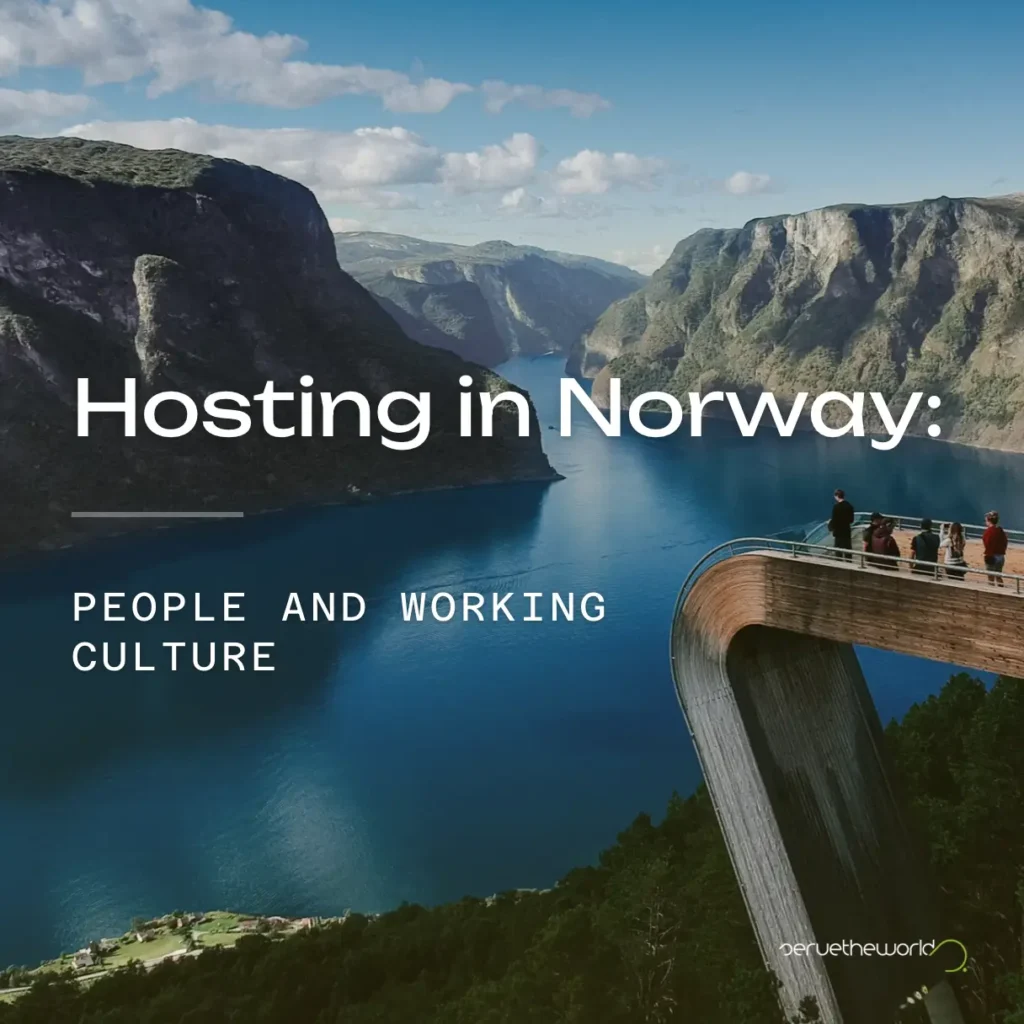
Hydropower, connectivity, and jurisdiction each make a strong case for hosting in Norway. Yet the people who will answer your support tickets or help plan your migration matter too. In this final part of this series on hosting in Norway, we offer a glimpse into everyday working life at ServeTheWorld and what international customers can expect when working with us.
English makes working together easier
English is widely spoken in Norway, and we’ll often switch languages to make a foreign speaker comfortable. In our experience, many Norwegians enjoy the chance to use English.
Everyone at ServeTheWorld speaks English, and much of our technical vocabulary is English anyway. To be honest, the Norwegian alternatives can often be a bit of a mouthful. Browser cookies, for instance, are officially informasjonskapsler. So most of us just say cookies!
You can definitely discuss a technical problem or ask about a configuration in English, without anyone involved ever having to reach for a dictionary.
How Norwegian businesses work
With only around 5.6 million people, Norway has a small domestic market, and small businesses are the norm. About 70% of Norwegian workplaces that employ staff have fewer than 10 employees. [1]
Employing people in Norway is expensive, so many keep a small core team and call in outside specialists for particular jobs. ServeTheWorld works the same way, so a project can draw on our experienced in-house staff and the right specialist for the job.
Norway is also particularly open about company finances, so you can check out companies before you start working with them. Proff shows company details and annual results for Norwegian companies, including privately owned ones. Search for ServeTheWorld AS or our organisation number 986716319.
Flat hierarchies and shared lunches
The openness carries into Norwegian offices, where good ideas get a hearing whoever has them, and managers are usually easy to approach. At ServeTheWorld, it’s natural to raise a question or suggest an improvement directly with management. In return, everyone is expected to know their area and take responsibility for it.
Management often surprises us with a lunch order, and we eat together or at our desks rather than going out for a long lunch. These lunches feel special partly because the everyday Norwegian lunch is relatively modest. The packed lunch, or matpakke, is still common at many workplaces, often just a few sandwiches brought from home.
Finishing at four, making room for family
Norwegian office days often start early and finish around four, which can surprise international customers used to reaching people later in the day. A 37.5-hour working week is common.
For many parents, the next stop is kindergarten or after-school care. In 2025, 94.5% of children aged one to five attended kindergarten. [2] Heavily subsidised childcare, parental leave, and paid days off to look after a sick child help both parents stay in work.
At ServeTheWorld, if a child needs attention or something urgent comes up at home, management encourages people to take care of it. The flexibility works because people trust each other to complete work on time and make sure colleagues and customers aren’t left waiting.
Our regular support follows office hours, and on-call help is available outside them by arrangement. The servers in our data centre, of course, don’t go home at four.
Plan around the holidays
Office hours are easy to plan around, but holidays need a bit more notice. If you’re planning a migration or a custom setup that needs several specialists, check the Norwegian holiday calendar first.
Five weeks of annual leave is common, and much of the country goes on holiday at the same time in July, during what we call fellesferie. Easter, Christmas, and public holidays also thin out both our team and our suppliers.
Let us know early, and we can line up the right people and supplier deliveries so your project keeps moving.
Direct about facts, gentle with a no
Once a project is under way, you’ll notice how directly most Norwegians communicate. Answers come with little small talk, and some visitors find that brusque until they get used to it.
Norwegians are often blunt about facts but gentler when the answer is no, and an unusual request may prompt discussion before anyone commits. If we can’t do something, we’ll tell you. If we aren’t sure yet, we’ll say so and come back with an answer.
A former colleague of mine handled sales in Spain and Italy before taking over the Nordic markets. He expected to miss his trips to warmer, “nicer” countries, but ended up loving the Nordics. One reason, he said, was that people here do what they say they’ll do. There’s no game-playing in negotiations, and everything is out in the open.
A country of introverts
Being direct at work doesn’t make all Norwegians chatty. Visitors sometimes describe Norway as a nation of introverts, and people here can sometimes be reserved with strangers, especially in Oslo, where they may pass without a greeting or avoid eye contact. To someone used to more spontaneous interaction, this can seem cold.
However, it’s usually meant as consideration. Keeping to ourselves gives you privacy and leaves it up to you whether to start a conversation. Habits vary from person to person, but Norwegian friendliness doesn’t always announce itself.
The reserve typically fades once there’s something real to talk about. Bring us a question about your server setup, and you’ll get a thorough answer, often with a suggestion or two for improving your workflow.
The skills behind the service
Much of that know-how traces back to Norway’s education system. In 2025, 50.2% of Norwegians aged 25 to 64 had completed higher education, compared with an EU average of 36.9%. [3] Public universities offer tuition-free study to Norwegian students and many foreign residents, and part-time courses make it practical to go back to studying mid-career.
Specialist businesses like ours depend on that pool of skills, whether we’re hiring or bringing in outside expertise.
A few everyday Norwegian surprises
Norway made much of its fortune from oil and gas, yet about 97% of new cars sold here in 2025 were electric, the highest share in the world. [4]
Some of us would need a moment to remember what the larger banknotes look like, because in 2026, cash accounted for just 3% of payments in shops and other physical points of sale. [5]
And for a country that values personal privacy, Norway can be surprisingly open about money. Public tax lists show assessed net income, net wealth, and tax. You need to log in to search, and be mindful that the person you look up can see that you’ve checked.
Our series on hosting in Norway ends here. A stable hydropower grid, well-connected networks, and clear Norwegian law make the country a predictable place to run servers, and its business culture makes the people behind those servers just as dependable.
The ServeTheWorld team
References
- Statistics Norway: Establishments, January 2026. The percentage refers to establishments with employees, rather than all companies.
- Statistics Norway: Kindergartens, 2025.
- Eurostat: Population by educational attainment level, 2025. The figures cover tertiary education for adults aged 25 to 64.
- International Energy Agency: Global EV Outlook 2026.
- Norges Bank: Retail Payment Services 2025, including the spring 2026 survey.